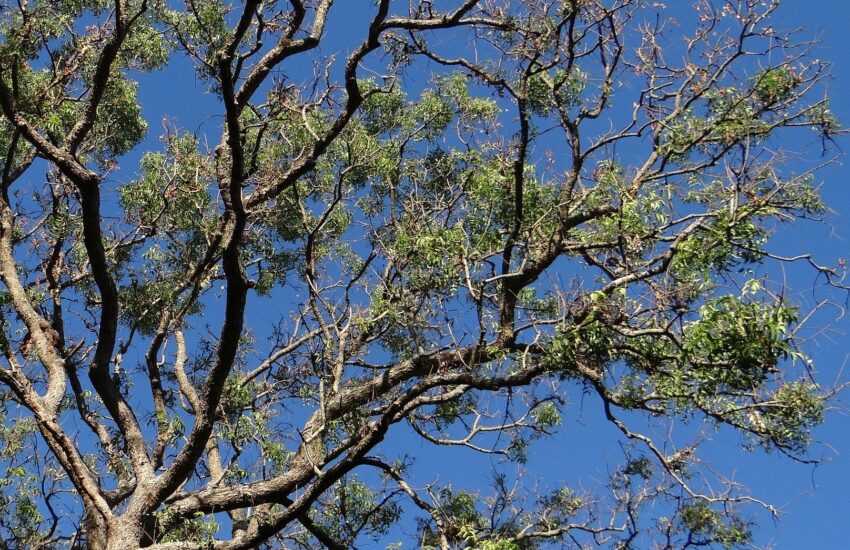
Neem, Azadirachta indica, is a fast-growing tree of the mahogany family, evergreen in all but the harshest drought, native to the Indian subcontinent and Burma and now planted across the dry tropics from West Africa to northern Australia. A mature tree stands 15 to 20 metres, throws deep shade, and lives well beyond a century. It tolerates poor soil, heat and long drought, which is why it lines village streets and roadsides across India and has been planted for shade and firewood wherever the climate suits it.
The seed
Neem flowers in spring with small white blossom and carries olive-shaped fruit that ripens yellow at the start of the monsoon. Each fruit holds one seed, and the kernel inside the seed is roughly 40 to 50 per cent oil. A good tree gives 30 to 50 kg of fruit a year. The fruit is collected as it falls, the pulp is washed off, and the seed is dried in the sun before it is stored or pressed.
Pressing
Cold pressing squeezes the kernel in a screw press without added heat or solvent. It gives less oil than solvent extraction but keeps the seed’s natural compounds, its colour and its smell, and the oil comes out golden to dark brown-green with the strong nutty, sulphurous note neem is known for. What is left in the press is neem cake, the fibrous residue that is dried and sold as an organic fertiliser. Nothing is wasted: oil from the kernel, cake from the residue, and the shell for fuel.
The rest of the tree
The timber is hard, reddish and durable, used for furniture and building in its home range. The twigs are chewed as a rustic toothbrush, and the oil has been burned in clay lamps and worked into soap in India since the early twentieth century.
What we do with the oil: what is neem oil used for? The pressed cake: neem cake powder.